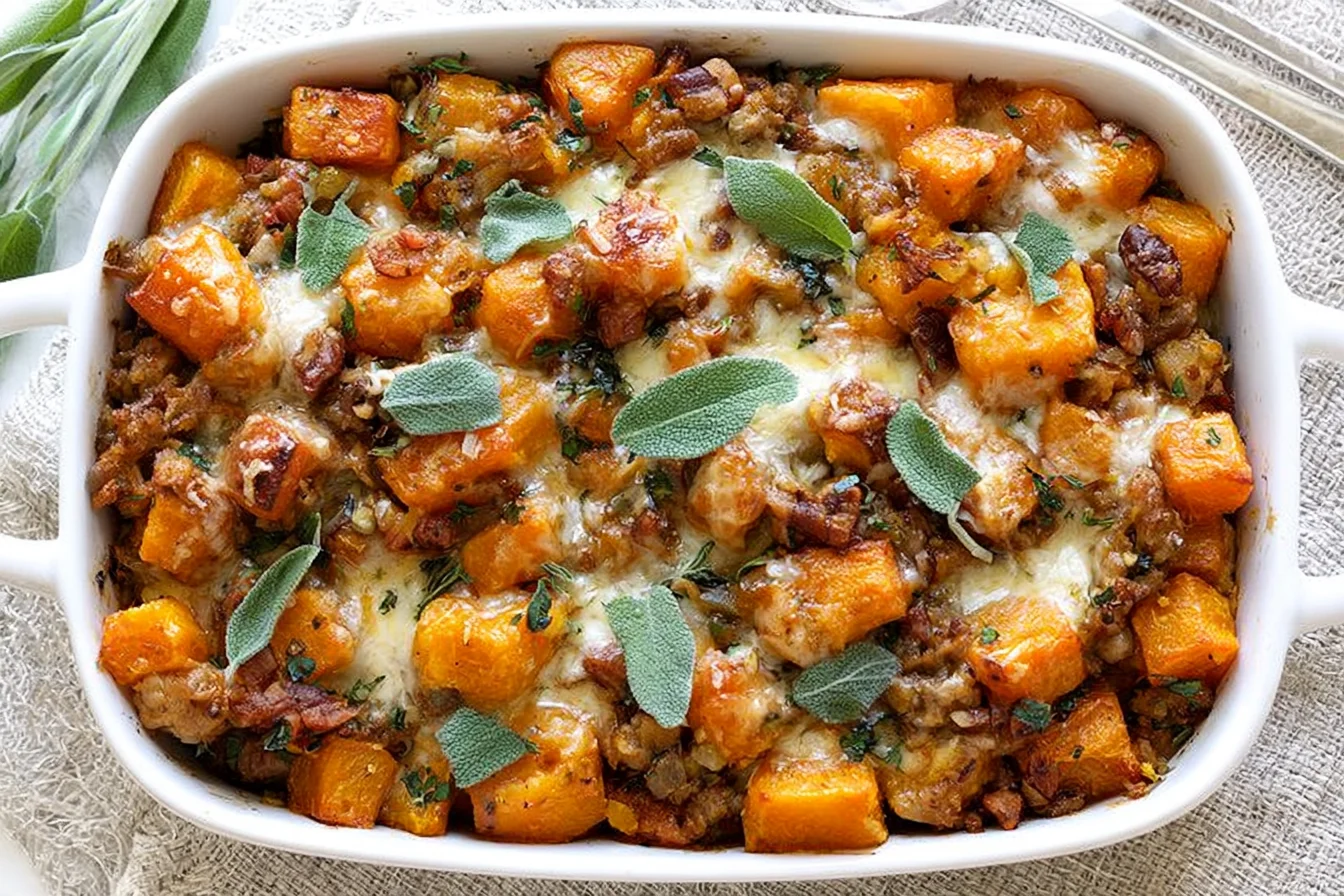
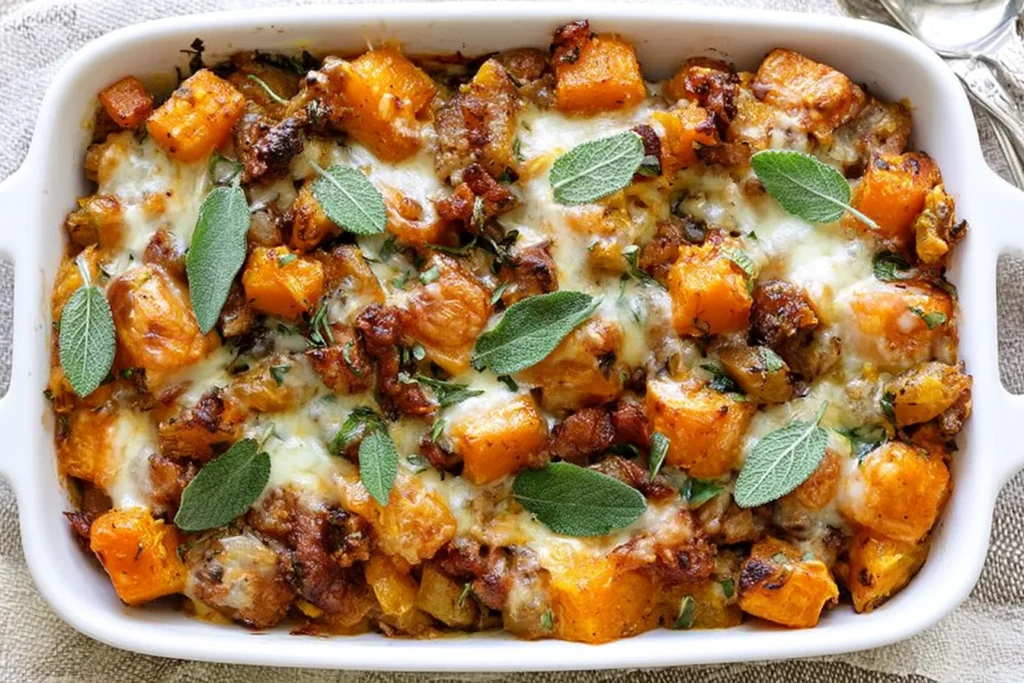
There’s something magical about pulling a bubbling casserole from the oven when the weather turns cool. The kitchen smells incredible, everyone suddenly wanders in asking, “When are we eating?” and dinner feels a little more special without requiring restaurant-level effort. This Butternut Squash Casserole is exactly that kind of dish, combining tender roasted butternut squash, sweet Honeycrisp apples, savory Italian sausage, caramelized fennel and onions, maple syrup, fragrant herbs, and a glorious layer of melted Gruyère cheese.
It’s sweet, savory, cheesy, and cozy all at once. I especially love recipes like this because they make simple seasonal ingredients feel gourmet without requiring you to spend the entire evening in the kitchen. Whether you’re planning a fall family dinner, looking for a memorable Thanksgiving side, or simply craving something hearty on a chilly weeknight, this casserole delivers.
Table of Contents
Why You’ll Love This Butternut Squash Casserole
- Big Sweet-Savory Flavor: Maple syrup and apples complement the savory sausage, herbs, and Gruyère beautifully.
- Simple Preparation: Most of the work involves roasting, sautéing, and combining—nothing complicated here.
- Perfect for Fall: Butternut squash, apples, fennel, sage, and maple bring classic autumn flavors to one cozy dish.
- Great for Entertaining: The golden cheese topping makes this casserole impressive enough for a holiday table.
- Easy to Customize: You can adjust the sausage, cheese, herbs, or sweetness to suit your family.
- Comforting Yet Elegant: It has all the warmth of a casserole with enough sophisticated flavor to impress dinner guests.
Ingredients You’ll Need
Here’s what you’ll need to make this hearty casserole:
- 2 pounds butternut squash, peeled and cut into medium cubes
- 2 Honeycrisp apples, peeled, cored, and cut into large cubes
- Olive oil, as needed
- Salt, to taste
- Black pepper, to taste
- 2 tablespoons pure maple syrup, divided
- ½ teaspoon dried ground sage
- 1½ teaspoons Herbes de Provence
- ½ pound sweet Italian sausage, casings removed and sausage crumbled
- 2 small fennel bulbs, stalks and fronds removed, halved, cored, and thinly sliced
- 1 onion, quartered and thinly sliced
- 1 cup grated Gruyère cheese
- Fresh or fried sage leaves, for garnish
A few ingredients deserve special attention here. Honeycrisp apples work beautifully because they have enough sweetness to complement the squash while still holding up during roasting. Gruyère brings a nutty, slightly salty richness that ties everything together.
And then there’s fennel. If you usually walk past those mysterious pale bulbs at the grocery store wondering what on earth to do with them, this is your moment. Once caramelized with onion, fennel becomes tender, mellow, and almost buttery.
How to Make Butternut Squash Casserole
1. Get the Oven Hot
Preheat your oven to 425°F.
Line a large baking sheet with foil and lightly coat it with cooking spray. A hot oven is important because we want the squash and apples to roast and caramelize rather than simply become soft.
2. Season the Squash and Apples
Place the cubed butternut squash and Honeycrisp apples in a large bowl.
Drizzle with about 2 tablespoons of olive oil. Add a generous couple of pinches of salt and black pepper, 1 tablespoon of maple syrup, dried sage, and Herbes de Provence.
Toss everything thoroughly so those seasonings reach every piece.
Spread the mixture across your prepared baking sheet in a fairly even layer.
3. Roast Until Tender
Roast the squash and apples for about 35 minutes, stirring them occasionally so they brown evenly.
They’re ready when the butternut squash is tender and beginning to caramelize around the edges.
Your kitchen should smell ridiculously good by now. Consider that your official warning that hungry family members may begin circling.
4. Brown the Italian Sausage
While the squash and apples are roasting, place a large skillet over medium-high heat. A cast-iron skillet works especially well here.
Add a small drizzle of olive oil.
Once the skillet is hot, add the crumbled sweet Italian sausage. Cook for several minutes, breaking up larger pieces, until browned and completely cooked through.
Transfer the sausage to a bowl and set it aside.
5. Caramelize the Fennel and Onion
Add a little more olive oil to the same skillet if needed.
Add your thinly sliced fennel and onion and cook for about 10 to 12 minutes, stirring occasionally.
Don’t rush this step.
You want the vegetables deeply golden, tender, and almost jammy. That caramelization adds a surprising amount of flavor to the finished casserole.
Once they’re ready, add them to the cooked sausage.
6. Combine Everything
When the squash and apples are tender, remove them from the oven and switch the oven setting to broil.
Carefully transfer the roasted squash and apples to a large mixing bowl.
Add the cooked sausage, caramelized fennel, and onion. Drizzle in the remaining tablespoon of maple syrup and gently toss everything together.
Taste and add another pinch of salt or black pepper if needed.
You’re looking for balance here—not dessert-level sweetness. The maple should highlight the squash and apples while the sausage and seasoning keep everything firmly on the savory side.
Transfer the mixture into a roughly 9-by-13-inch baking dish.
7. Add the Gruyère
Sprinkle the grated Gruyère evenly over the casserole.
Place the baking dish under the broiler for a few minutes, watching it closely.
Once the cheese is melted, bubbling, and beautifully golden brown, pull it out.
Broilers have a mischievous personality. One minute your cheese is pale, and the next it has ambitions of becoming charcoal, so stay nearby.
8. Add the Sage Garnish
You can garnish the casserole with fresh sage leaves, but fried sage makes a wonderful finishing touch.
Heat about ¼ cup olive oil in a small saucepan until shimmering. Carefully add the sage leaves and fry for approximately 20 seconds.
Transfer them to paper towels to drain and sprinkle lightly with salt.
Scatter the crisp sage leaves over your finished casserole just before serving.
Chef Omar’s Tips for the Best Results
- Cut similar-sized pieces. Try to keep your squash cubes relatively consistent so they cook at the same rate. Make the apple pieces slightly larger because apples soften faster.
- Give the vegetables room. Avoid overcrowding your baking sheet. If everything is packed together, the ingredients will steam instead of developing those delicious caramelized edges.
- Grate your own Gruyère when possible. Freshly grated cheese generally melts more smoothly than pre-shredded cheese.
- Watch the broiler carefully. You only need enough time to melt and brown the cheese. Don’t wander away to check your phone. The broiler knows.
- Taste before baking. Once the roasted mixture, sausage, fennel, onion, and final tablespoon of maple syrup are combined, taste and adjust the seasoning.
I’ve found that dishes like this often disappear faster than expected when served to friends. People recognize butternut squash, but the combination of apples, fennel, sausage, and Gruyère gives them something unexpected to talk about. Those are my favorite recipes—the ones that feel familiar at first bite and then make you reach back for another spoonful.
faqs about Butternut Squash Casserole
Can I make this Butternut Squash Casserole without sausage?
Absolutely. Leave out the sausage for a vegetarian version. You may want to add toasted walnuts or pecans for extra texture and richness.
Can I use a different apple?
Yes. Honeycrisp is excellent because of its balance of sweetness and acidity, but Pink Lady, Braeburn, or Granny Smith can work well too. Choose an apple that stays reasonably firm when cooked.
What can I substitute for Gruyère?
Try Swiss, Comté, fontina, or a combination of cheeses with good melting qualities. Each changes the flavor slightly, but that’s part of the fun.
Can I prepare it the day before?
Yes. Prepare the components and assemble the casserole ahead of time, then refrigerate it covered. Add or finish the cheese topping when reheating for the best texture.
How do I keep the squash from becoming mushy?
Don’t cut the pieces too small, and spread them out on the baking sheet. Roasting at 425°F gives the squash time to develop browned edges while becoming tender inside.
Is this a side dish or a main dish?
It can be either. Because it contains sausage and cheese, it’s hearty enough for a casual main course. Smaller portions make it an excellent fall or holiday side dish.
Bring Cozy Fall Flavor to the Table
This is the kind of cooking I love sharing at PulseRecipes: approachable ingredients, straightforward steps, and just enough creativity to make dinner exciting again.
With caramelized butternut squash, juicy apples, savory Italian sausage, tender fennel, maple syrup, fragrant herbs, and bubbling Gruyère, every forkful delivers a little bit of sweet, salty, creamy, and savory goodness.
Serve this Butternut Squash Casserole for a relaxed family dinner or give it a spot on your holiday table. Either way, bring it to the table while that Gruyère is still warm and golden—and don’t count on leftovers.
More Cozy Recipes to Try
If this Butternut Squash Casserole has you craving even more cozy, seasonal cooking, keep the oven warm because there’s plenty more to explore. These recipes pair naturally with the sweet, savory, roasted flavors you just enjoyed:
- Try these baked chickpeas with butternut squash for another delicious way to turn tender butternut squash into a hearty, satisfying meal.
- For even more fall comfort, this butternut squash and black bean enchilada skillet gives the seasonal favorite a bold, Southwestern-inspired twist.
- Love the maple-and-apple combination? These maple Dijon roasted carrots and apples make a colorful side dish that fits beautifully into a cozy fall or holiday menu.
- For another warm vegetable-packed dinner, make this comforting mushroom pot pie when you’re in the mood for something hearty and oven-baked.
Made this Butternut Squash Casserole? ⭐⭐⭐⭐⭐ Leave a star rating and share your review below! I’d love to hear how it turned out, what you served with it, and whether your family went back for seconds.
Butternut Squash Casserole
- Total Time: 1 hour 20 minutes
- Yield: 8 servings 1x
Description
This cozy Butternut Squash Casserole combines caramelized roasted squash and Honeycrisp apples with savory Italian sausage, fennel, maple syrup, herbs, and melted Gruyère. Finished with fresh sage, it’s a sweet-and-savory fall casserole that works beautifully for family dinners, Thanksgiving, or holiday entertaining.
Ingredients
- 2 pounds butternut squash, peeled and cut into medium cubes
- 2 Honeycrisp apples, peeled, cored, and cut into large cubes
- 2 tablespoons olive oil, plus more as needed
- Salt, to taste
- Black pepper, to taste
- 2 tablespoons pure maple syrup, divided
- ½ teaspoon dried ground sage
- 1½ teaspoons Herbes de Provence
- ½ pound sweet Italian sausage, casings removed and crumbled
- 2 small fennel bulbs, stalks and fronds removed, halved, cored, and thinly sliced
- 1 onion, quartered and thinly sliced
- 1 cup grated Gruyère cheese
- Fresh sage leaves, for garnish
- ¼ cup olive oil, optional, for frying sage leaves
Instructions
- Preheat the oven to 425°F. Line a large baking sheet with foil and lightly coat it with cooking spray.
- Place the cubed butternut squash and apples in a large bowl. Drizzle with about 2 tablespoons olive oil. Add salt, black pepper, 1 tablespoon maple syrup, dried sage, and Herbes de Provence. Toss until evenly coated.
- Spread the squash and apples in an even layer on the prepared baking sheet. Roast for about 35 minutes, stirring occasionally, until the squash is tender and lightly caramelized.
- Meanwhile, heat a large skillet over medium-high heat with a small drizzle of olive oil. Add the crumbled Italian sausage and cook until browned and completely cooked through. Transfer to a bowl.
- Add a little more olive oil to the skillet if necessary. Add the sliced fennel and onion and cook for 10–12 minutes, stirring occasionally, until deeply golden, tender, and caramelized. Add them to the cooked sausage.
- When the squash and apples are finished roasting, remove them from the oven and change the oven setting to broil.
- Transfer the roasted squash and apples to a large bowl. Add the sausage, fennel, and onion mixture. Drizzle with the remaining 1 tablespoon maple syrup and gently toss. Taste and adjust the salt and pepper as needed.
- Transfer the mixture to a roughly 9-by-13-inch baking dish. Sprinkle the grated Gruyère evenly over the top.
- Place under the broiler for a few minutes, watching closely, until the cheese is melted, bubbling, and golden brown.
- For optional fried sage, heat about ¼ cup olive oil in a small saucepan until shimmering. Fry the sage leaves for about 20 seconds, then transfer them to paper towels and lightly season with salt.
- Garnish the casserole with fresh or fried sage leaves and serve warm.
Notes
- Cut the apples slightly larger than the butternut squash because they soften more quickly during roasting. For better caramelization, avoid overcrowding the baking sheet.
- Keep a close eye on the casserole while broiling because Gruyère can brown quickly.
- For a vegetarian variation, omit the Italian sausage and consider adding toasted pecans or walnuts for extra texture.
- The casserole can be partially prepared ahead of time. Roast the squash and apples, cook the sausage and vegetables, and assemble everything in the baking dish. Refrigerate covered, then add the cheese and finish heating and broiling before serving.
- Store leftovers in an airtight container in the refrigerator for 3–4 days.
- Prep Time: 25 minutes
- Cook Time: 55 minutes
- Category: side dish
- Method: Roasting / Baking
- Cuisine: American
Nutrition
- Serving Size: 1/8 of casserole
- Calories: 360 kcal
- Sugar: 12 g
- Sodium: 480 mg
- Fat: 23 g
- Saturated Fat: 8 g
- Unsaturated Fat: 14 g
- Trans Fat: 0 g
- Carbohydrates: 30 g
- Fiber: 5 g
- Protein: 12 g
- Cholesterol: 35 mg