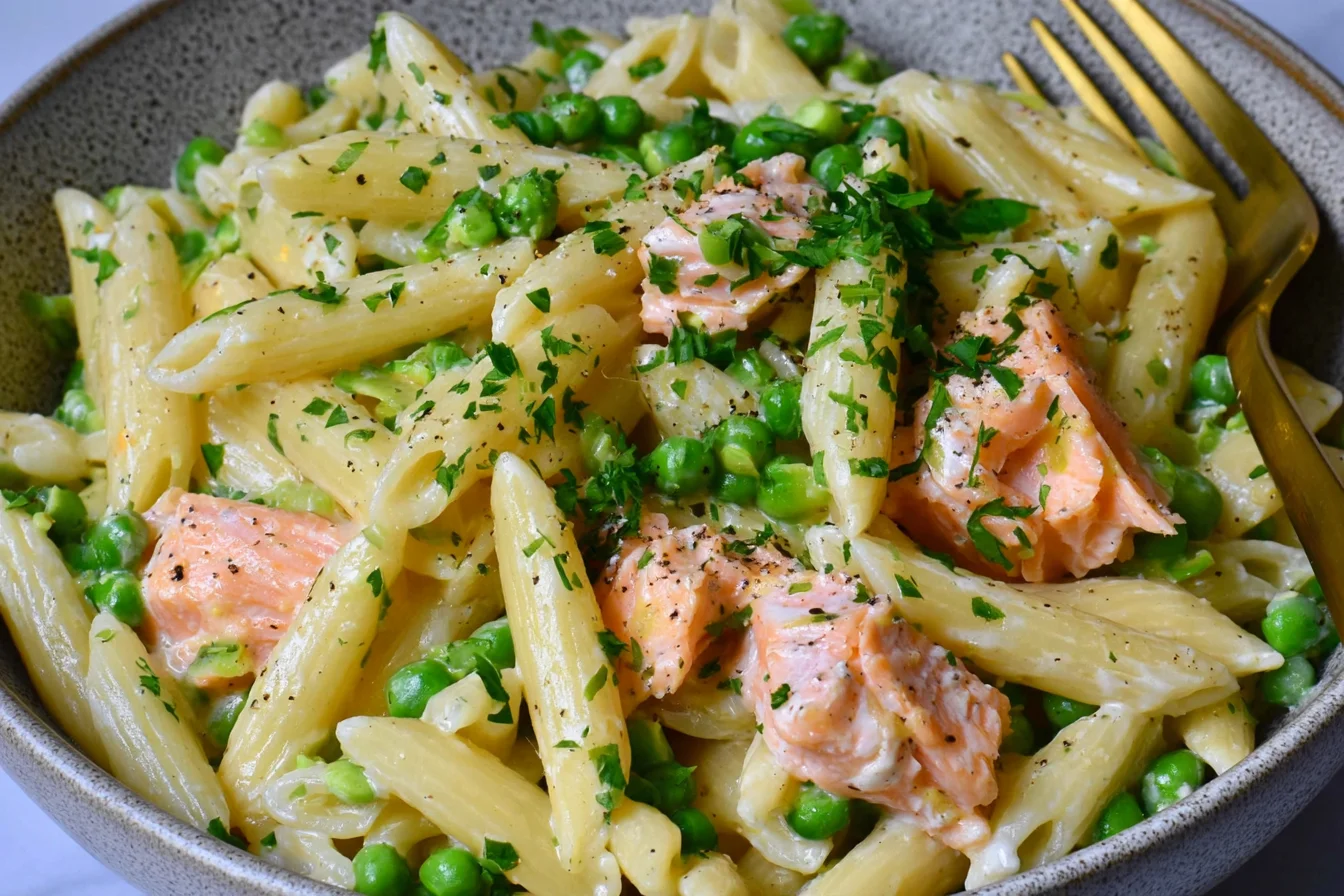
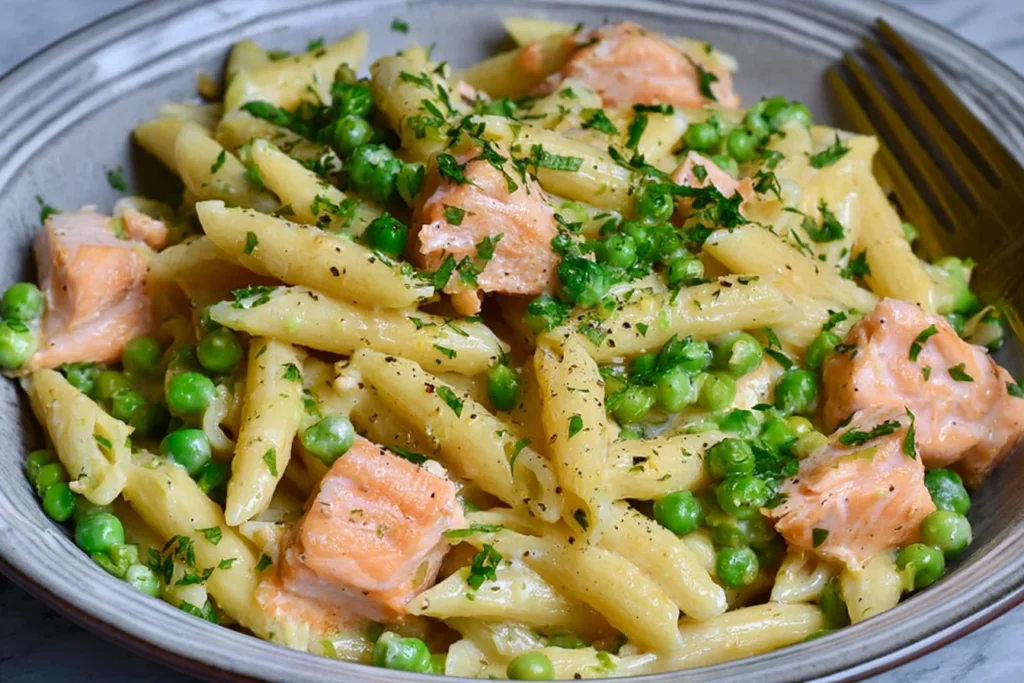
Salmon and Pea Pasta with Lemon is the kind of dinner that makes an ordinary weeknight feel a little special. Imagine tender, flaky salmon, sweet green peas, and perfectly cooked penne tossed in a silky crème fraîche sauce with bright lemon zest and fresh herbs. It’s creamy, comforting, and refreshing all at once!
The best part? You don’t need complicated ingredients or hours in the kitchen. This Salmon and Pea Pasta with Lemon and Crème Fraîche brings restaurant-style flavor to your dinner table with surprisingly little effort.
Hi, I’m Chef Omar! I love recipes that look impressive but are simple enough to prepare after a busy day. This pasta is a wonderful example. The lemon balances the richness of the salmon, while crème fraîche creates a smooth, luxurious sauce without feeling overly heavy.
Whether you’re making a cozy dinner for two or treating yourself to something delicious, this recipe deserves a spot in your weekly rotation.
Table of Contents
Why You’ll Love This Salmon and Pea Pasta with Lemon
- Quick and Easy: Ready in approximately 30 minutes, making it perfect for busy evenings when you want something homemade without spending hours cooking.
- Rich, Creamy Flavor: Crème fraîche creates a silky sauce that coats every piece of pasta while keeping the dish pleasantly light and fresh.
- Simple Ingredients: Salmon, pasta, frozen peas, and lemon come together to create an impressive meal with everyday ingredients.
- Easy to Customize: Swap the pasta shape, experiment with fresh herbs, or add extra vegetables to make this recipe your own.
- Perfect for Date Night: The combination of tender salmon, lemon, and creamy pasta feels elegant enough for a romantic dinner at home.
- Balanced and Satisfying: Salmon provides protein, peas add fiber, and pasta makes the meal filling and comforting.
Ingredients You’ll Need
One of my favorite things about this dish is how a few carefully chosen ingredients create layers of flavor. You don’t need a long shopping list to make something wonderful.
Main Ingredients
- 2 salmon fillets: Fresh or properly thawed salmon works beautifully. Choose skin-on or skinless fillets, depending on your preference.
- 200 g (7 oz) penne pasta: Penne holds the creamy sauce wonderfully, but fusilli or farfalle also work.
- 1 large banana shallot: Finely chopped for a delicate, slightly sweet onion flavor. A regular large shallot is a suitable substitute.
- 2 handfuls frozen petit pois: These small, sweet peas add freshness, color, and a pleasant contrast to the rich salmon.
- 6 tablespoons crème fraîche: The secret to the smooth, creamy texture. Full-fat crème fraîche generally creates the richest sauce.
- Zest of ½ lemon: Adds a fresh citrus aroma without overpowering the other ingredients.
- Fresh lemon juice, to taste: Brightens the sauce and balances its richness.
- White wine: A splash for baking the salmon, plus 100 ml (about 7 tablespoons) for the sauce.
- Light cooking oil: A small amount for gently sautéing the shallot.
- Sea salt and freshly ground black pepper: Essential for seasoning the salmon, pasta, and sauce.
- Small handful fresh parsley or dill: Chopped and sprinkled over the finished dish.
Ingredient Tips and Substitutions
- Crème fraîche: If you cannot find crème fraîche, heavy cream can work as an alternative, although the flavor will be less tangy. Add a little extra lemon juice to brighten the sauce.
- Salmon: Fresh salmon provides excellent texture, but frozen salmon is perfectly suitable once completely thawed. Pat the fillets dry before seasoning.
- Frozen peas: No need to thaw them first! Add them directly to the warm sauce.
- Fresh herbs: Dill pairs naturally with salmon, while parsley creates a milder, fresher finish.
How to Make Salmon and Pea Pasta with Lemon
Making Salmon and Pea Pasta with Lemon and Crème Fraîche is surprisingly straightforward. The salmon bakes while the pasta cooks, and the sauce comes together in one pan.
Step 1: Bake the Salmon
Preheat your oven to 180°C (350°F).
Place the salmon fillets on a large sheet of aluminum foil and gently lift the edges to catch the cooking liquid.
Pour a splash of white wine over the salmon, then season with sea salt and freshly ground black pepper.
Fold the foil into a sealed packet, leaving a little space for steam to circulate.
Bake for approximately 10 minutes, or until the salmon is cooked through. Thicker fillets may need additional time. For food safety, cook the salmon to an internal temperature of 145°F (63°C).
Chef Omar’s tip: Baking salmon in foil helps retain moisture and creates tender, flavorful fish that flakes beautifully into pasta.
Step 2: Cook the Penne Pasta
While the salmon bakes, bring a large pot of salted water to a boil.
Add the penne and cook according to the package instructions until al dente.
Before draining, reserve about ½ cup of the starchy pasta cooking water.
Drain the pasta and set it aside.
That reserved water is one of the simplest tricks for creating a smooth sauce. The starch helps the crème fraîche coat the pasta without becoming too thick.
Step 3: Sauté the Shallot
Peel and finely chop the banana shallot.
Heat a splash of light cooking oil in a medium or large frying pan over medium heat.
Add the chopped shallot and a small pinch of salt.
Cook gently for approximately 3–4 minutes, stirring occasionally, until softened but not browned.
The goal is a sweet, delicate flavor rather than a strong, caramelized taste.
Step 4: Prepare the Creamy Lemon Sauce
Pour 100 ml of white wine into the pan with the softened shallot.
Allow it to simmer for approximately 2–3 minutes, reducing slightly.
Add the frozen peas and cook for another 2 minutes, until heated through.
Stir in the crème fraîche, freshly ground black pepper, and lemon zest.
Mix gently until everything forms a smooth, creamy sauce.
Keep the heat moderate to low so the sauce remains silky.
Step 5: Combine the Salmon, Pasta, and Sauce
Remove the cooked salmon from its foil packet and discard the skin, if present.
Gently break the salmon into large flakes using a fork.
Add the drained penne to the creamy sauce and lower the heat.
Toss until the pasta is evenly coated, adding small splashes of reserved pasta water if needed.
Carefully fold in the salmon, keeping the pieces relatively large.
This helps preserve the salmon’s delicate texture and gives the finished dish a beautiful presentation.
Step 6: Finish with Lemon and Fresh Herbs
Taste the pasta and adjust the seasoning with additional salt, black pepper, and lemon juice.
If the sauce becomes too thick, add another tablespoon or two of reserved pasta water.
Spoon the pasta into warm serving bowls and sprinkle generously with chopped parsley or dill.
Serve immediately while the sauce is creamy and the salmon is tender.
Chef Omar’s Tips for Perfect Creamy Salmon Pasta
Even simple recipes benefit from a few professional techniques. These little details can make your pasta taste like something from your favorite Italian-inspired restaurant.
1. Don’t Overcook the Salmon
Salmon can become dry when cooked for too long. Check the thickest part with a food thermometer and avoid leaving it in the oven longer than necessary.
2. Save the Pasta Water
Starchy pasta water is incredibly useful for adjusting creamy sauces.
Add it gradually until your sauce reaches a smooth, glossy consistency.
3. Use Fresh Lemon
Freshly grated lemon zest provides a fragrant citrus flavor that bottled lemon juice cannot replace.
Add lemon juice toward the end so you can control the acidity.
4. Keep the Sauce on Low Heat
Once you add the crème fraîche, avoid rapid boiling.
Gentle heat creates the smoothest texture and helps prevent the sauce from separating.
5. Fold in the Salmon Gently
Stirring too aggressively can break the salmon into tiny pieces.
Use a wide spoon or spatula and fold the fish into the pasta just before serving.
Delicious Variations to Try
One reason I enjoy cooking pasta is its flexibility. A few small changes can give the same recipe an entirely different personality.
Spinach and Salmon Pasta: Stir in a handful of fresh baby spinach during the final minute of cooking. It wilts quickly and adds another layer of color.
Garlic Lemon Salmon Pasta: Add one or two minced garlic cloves to the shallot for a more aromatic sauce.
Extra-Lemony Version: Increase the lemon zest slightly and finish with an additional squeeze of lemon juice for a brighter flavor.
Creamy Salmon and Asparagus Pasta: Replace some of the peas with chopped asparagus. Cook until tender-crisp before adding the crème fraîche.
Smoked Salmon Variation: Use ready-to-eat smoked salmon instead of baked salmon for a different flavor profile. Fold it in at the end and reduce the added salt.
faqs about Salmon and Pea Pasta with Lemon
Can I make Salmon and Pea Pasta with Lemon without white wine?
Absolutely! Replace the white wine with vegetable or chicken broth. Add a small squeeze of lemon juice for extra brightness. This provides a flavorful alcohol-free alternative.
What can I use instead of crème fraîche?
Heavy cream is a convenient substitute. You can also use full-fat sour cream, but stir it in over very low heat to reduce the risk of curdling.
Can I use canned salmon?
Yes. Drain canned salmon thoroughly, remove any unwanted skin or bones, and gently fold it into the sauce near the end of cooking. Because it is already cooked, it only needs to be heated through.
Is Salmon and Pea Pasta with Lemon and Crème Fraîche good for meal prep?
Yes, although it tastes best fresh. Store individual portions in airtight containers and reheat gently with a little water to loosen the creamy sauce.
Which pasta shape works best?
Penne is excellent because its hollow shape catches the sauce. Fusilli, farfalle, rigatoni, and tagliatelle are also delicious options.
Can I add more vegetables?
Definitely! Baby spinach, asparagus, zucchini, and broccoli all work well. Cook firmer vegetables before adding them to the sauce so everything finishes at the same time.
A Fresh and Creamy Dinner Worth Making Again
Some dinners are memorable because they’re complicated. Others become favorites because they deliver incredible flavor with very little effort.
This Salmon and Pea Pasta with Lemon belongs firmly in the second category.
With tender salmon, sweet peas, fragrant lemon zest, and a velvety crème fraîche sauce, every forkful offers a delicious balance of comfort and freshness.
Whether you’re cooking for family, planning a relaxed date night, or simply craving a satisfying homemade meal, this recipe is an easy way to make dinner feel special.
Give this Salmon and Pea Pasta with Lemon and Crème Fraîche a try, and don’t forget to save the recipe for your next pasta night!
Made this recipe? Leave a comment and a star rating to share how it turned out. For more easy, flavorful dinner ideas, explore Pulse Recipes and discover your next favorite meal.
More Delicious Salmon and Pasta Recipes to Try
If you loved this Salmon and Pea Pasta with Lemon, you’ll definitely want to explore more delicious dinner ideas from Pulse Recipes! Whether you’re craving another creamy seafood dish or a fresh, citrusy pasta, these four recipes are perfect for your next meal:
- Creamy Lemon Garlic Pasta and Salmon – A rich, comforting seafood pasta packed with zesty lemon and garlic flavors. Perfect for creamy pasta lovers!
- Salmon with Lemon Dill Sauce – A flavorful salmon recipe featuring the refreshing combination of lemon and fresh dill, ideal for a light and satisfying dinner.
- Creamy Salmon Orzo – A delicious alternative to traditional pasta, combining tender salmon with creamy orzo for an easy, comforting meal.
- Lemon Zucchini Rigatoni with Parmesan – A bright, veggie-packed pasta dish with fresh lemon and Parmesan, perfect when you’re craving something simple and flavorful.
⭐ Loved this recipe? We’d love to hear from you! Leave a 5-star rating if you enjoyed it, and share your experience in the comments below. Your feedback helps other home cooks discover delicious recipes and inspires us to keep sharing easy, flavorful meals!
Salmon and Pea Pasta with Lemon
- Total Time: 30 minutes
- Yield: 2 servings 1x
Description
Creamy Salmon and Pea Pasta with Lemon and Crème Fraîche is an easy 30-minute dinner featuring tender, flaky salmon, sweet green peas, and penne tossed in a silky lemon cream sauce. Finished with fresh herbs, this comforting seafood pasta is perfect for busy weeknights or special occasions.
Ingredients
2 salmon fillets
200 g (7 oz) penne pasta
1 large banana shallot, finely chopped
2 handfuls frozen petit pois (green peas)
6 tablespoons crème fraîche
Zest of ½ lemon
Fresh lemon juice, to taste
1 tablespoon light cooking oil
Sea salt, to taste
Freshly ground black pepper, to taste
Small handful fresh parsley or dill, chopped
½ cup reserved pasta cooking water, as needed
Instructions
1. Prepare the Salmon: Preheat your oven to 350°F (180°C). Place the salmon fillets on a sheet of aluminum foil, lifting the edges to hold the liquid. Add a splash of white wine and season with salt and black pepper. Fold the foil into a sealed packet.
2. Bake the Salmon: Bake for approximately 10 minutes, or longer depending on thickness, until the salmon reaches an internal temperature of 145°F (63°C). Remove from the oven, discard the skin if necessary, and gently flake into large pieces.
3. Cook the Pasta: Bring a large pot of salted water to a boil. Add the penne and cook according to package instructions until al dente. Reserve ½ cup of pasta water before draining.
4. Sauté the Shallot: Heat the cooking oil in a large frying pan over medium heat. Add the finely chopped shallot and a pinch of salt. Cook for 3–4 minutes until softened but not browned.
5. Prepare the Sauce: Pour 100 ml of dry white wine into the pan and simmer for 2–3 minutes. Add the frozen peas and cook until heated through. Stir in the crème fraîche, lemon zest, and freshly ground black pepper.
6. Combine the Pasta: Reduce the heat to low and add the cooked penne to the creamy sauce. Toss gently until evenly coated. Add a splash of reserved pasta water if the sauce becomes too thick.
7. Add the Salmon: Carefully fold the flaked salmon into the pasta, keeping the pieces large and tender. Heat gently until everything is warmed through.
8. Season and Serve: Adjust the seasoning with salt, black pepper, and fresh lemon juice. Serve immediately in warm bowls, garnished with chopped parsley or dill.
Notes
Salmon: Avoid overcooking the salmon to keep it moist and tender.
Crème Fraîche Substitute: Heavy cream can be used, although it will produce a less tangy sauce.
Alcohol-Free Option: Substitute vegetable or chicken broth for the white wine.
Pasta Water: Reserve some starchy pasta water to maintain a smooth, creamy sauce.
Pasta Options: Fusilli, farfalle, or rigatoni can replace penne.
Extra Vegetables: Add baby spinach, asparagus, or zucchini for additional flavor and nutrients.
Storage: Refrigerate leftovers in an airtight container for up to 3–4 days.
Reheating: Gently reheat in a skillet with a splash of water or broth until the leftovers reach 165°F (74°C).
- Prep Time: 10 minutes
- Cook Time: 20 minutes
- Category: Dinner
- Method: Stovetop,Baking
- Cuisine: European-Inspired
Nutrition
- Serving Size: 1 serving (½ recipe)
- Calories: 740 kcal
- Sugar: 7 g
- Sodium: 350 mg
- Fat: 35 g
- Saturated Fat: 13 g
- Unsaturated Fat: 19 g
- Trans Fat: 0.5 g
- Carbohydrates: 81 g
- Fiber: 6 g
- Protein: 41 g
- Cholesterol: 130 mg