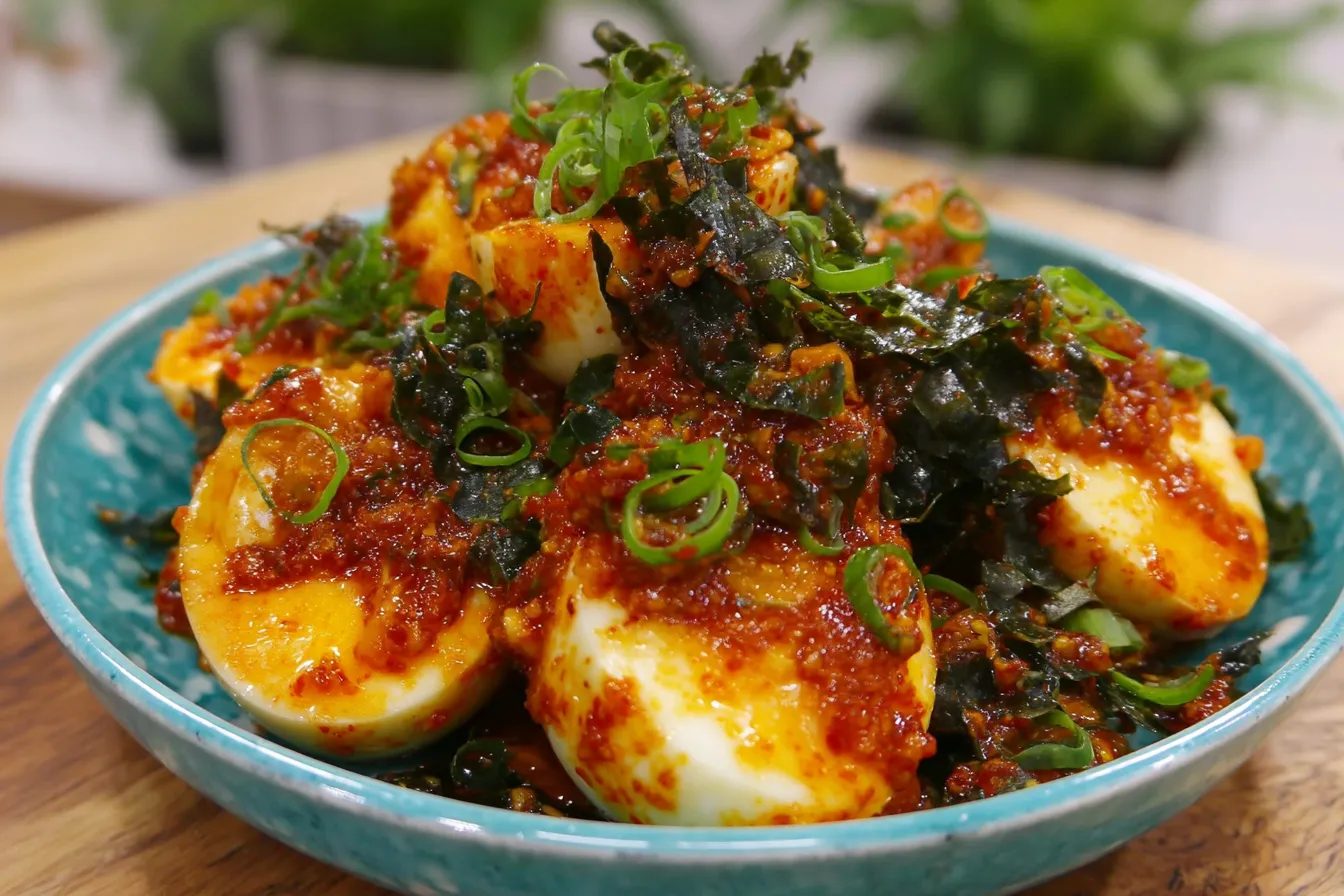
If your mornings are stuck in a scrambled-egg rut, Spicy Gochujang Eggs are about to shake things up—in the best way possible. These fiery-yet-cozy eggs bring together savory heat, a whisper of sweetness, and that unmistakable Korean-inspired depth that makes you want one more bite… and then another.
This is the kind of breakfast that feels a little fancy but secretly fits into a busy weekday. Ten minutes of prep, ten minutes of cooking, and suddenly your kitchen smells like a trendy brunch café. Whether you’re powering through a workday, fueling a school drop-off marathon, or simply craving something exciting, this recipe delivers big flavor without big effort.
Grab your apron—Chef Omar here—and let’s turn a humble egg into something unforgettable
Table of Contents
Why You’ll Love These Spicy Gochujang Eggs
Let’s be real: eggs are reliable, but they don’t always thrill us. Spicy Gochujang Eggs change that story completely.
Here’s why they’ll earn a permanent spot in your breakfast (or anytime) rotation:
- Fast but impressive – Ready in about 25 minutes, start to finish
- Flavor-packed – Spicy, savory, slightly sweet, and deeply satisfying
- Versatile – Perfect over rice, toast, noodles, or even tucked into a bowl of veggies
- Customizable – Runny yolks or fully set? Mild heat or extra kick? You’re in charge
I first made these eggs when friends popped by unannounced one morning (classic). I needed something quick that felt intentional. One skillet later, everyone asked for the recipe—and here we are.
Ingredients You’ll Need
For the Eggs
- 2 large eggs
Boil for 6 minutes for jammy centers or 9 minutes for hard-boiled.
For the Spicy Gochujang Sauce
- 2 tablespoons gochujang (Korean chili paste)
- 1 tablespoon soy sauce (or tamari for gluten-free)
- 1 teaspoon sugar (brown sugar adds deeper flavor)
- 1 tablespoon rice vinegar (apple cider vinegar works too)
- ¼ cup chicken stock or water (vegetable stock for vegetarian)
- 1 tablespoon neutral oil (sesame oil if you want extra nuttiness)
- 2 cloves garlic, minced
For Garnish
- 1 tablespoon scallions, sliced
- 1 tablespoon toasted sesame seeds
How to Make Spicy Gochujang Eggs (Step-by-Step)
1. Boil the Eggs
Bring a pot of water to a rolling boil. Gently lower in the eggs, cover, and cook:
- 6–7 minutes for runny, golden centers
- 9 minutes for fully set yolks
Timing matters here, but don’t stress—eggs are forgiving friends.
2. Ice Bath Magic
Transfer the eggs straight into an ice bath. This stops cooking instantly and makes peeling easier (future you will be grateful). Once cool, peel and set aside.
3. Mix the Sauce
In a bowl, whisk together gochujang, soy sauce, sugar, rice vinegar, and stock until smooth and glossy. Taste it. Smile. Try not to eat it with a spoon.
4. Build the Flavor
Heat oil in a skillet over medium-high heat. Add garlic and sauté for about 15 seconds, just until fragrant—don’t let it brown. Pour in the sauce and bring it to a gentle simmer.
5. Coat the Eggs
Add the peeled eggs to the skillet. Let them simmer for about 3 minutes, turning gently so every inch gets coated in that spicy, sticky goodness.
6. Serve & Garnish
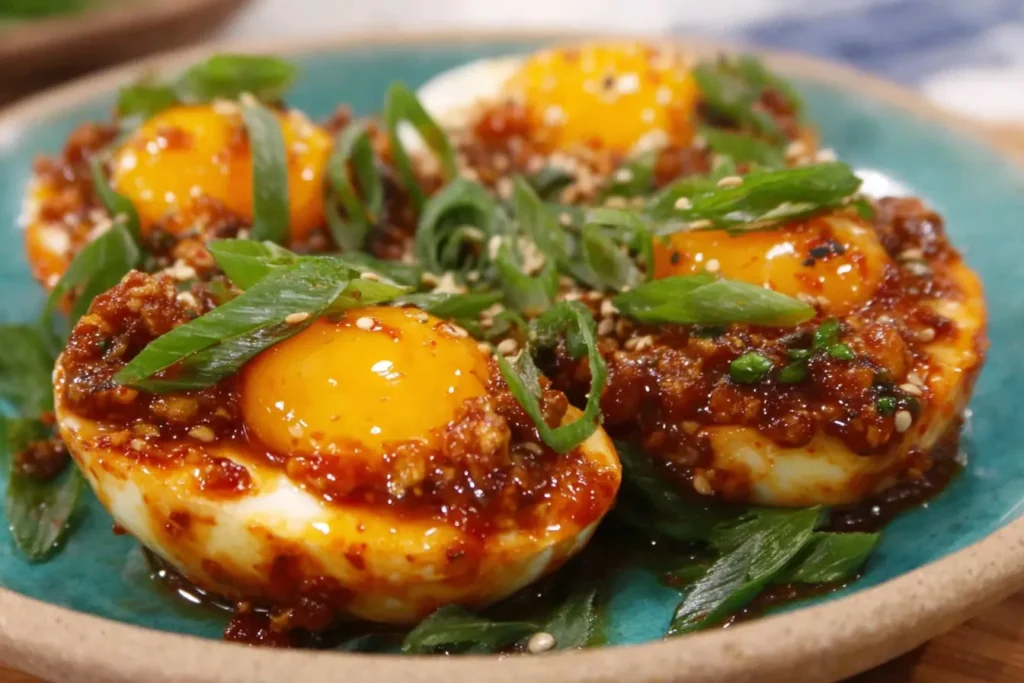
Serve the eggs over steamed rice or toast. Sprinkle with scallions and toasted sesame seeds. Optional (but highly encouraged): a tiny drizzle of sesame oil on top.
Chef Omar’s Cooking Tips (Because Life Happens)
- Sauce too thick? Add a splash of water or stock—it’ll loosen right up.
- Too spicy? A pinch of sugar or a spoon of honey calms things down fast.
- Eggs hard to peel? Older eggs peel easier than super-fresh ones. Science is funny like that.
- Want crunch? Add crispy onions or chili oil at the end. Breakfast deserves texture too.
And if your sauce looks a little wild in the pan—don’t worry. Once it hugs those eggs, everything mellows out beautifully.
Serving Ideas That Make It a Meal
Spicy Gochujang Eggs don’t have to stop at breakfast. Try them:
- Over jasmine or brown rice for a quick lunch
- With sautéed spinach or bok choy for balance
- On avocado toast (trust me on this one)
- Chopped into a grain bowl with cucumbers and carrots
They’re protein-packed, satisfying, and endlessly flexible.
FAQs About Spicy Gochujang Eggs
Can I make Spicy Gochujang Eggs less spicy?
Absolutely. Use a little less gochujang and add an extra teaspoon of sugar or stock to soften the heat.
How long do these eggs keep in the fridge?
Stored in an airtight container, they’ll keep for up to 3 days. Reheat gently on the stove.
Can I use another chili paste instead of gochujang?
You can, but the flavor will change. Gochujang’s sweet-heat balance is what makes this dish shine.
Are Spicy Gochujang Eggs good for meal prep?
Yes! Make a batch and enjoy them throughout the week with rice or veggies.
A Breakfast Worth Waking Up For
Some mornings call for comfort. Others call for excitement. Spicy Gochujang Eggs manage to do both—warm, bold, and just adventurous enough to make breakfast feel special again.
Whether you’re cooking for yourself or sharing with someone you love, this dish proves that simple ingredients can still bring serious wow-factor. So go ahead, give these Spicy Gochujang Eggs a try, and let your morning routine taste a little more exciting.
From my kitchen to yours—happy cooking and even happier mornings 💛🔥
Keep the Spice Going: Delicious Ideas to Try Next
If these Spicy Gochujang Eggs lit up your taste buds, there are plenty of cozy, flavorful dishes that fit right into the same mealtime mood. Whether you’re planning your next breakfast, a quick lunch, or an easy dinner, these recipes keep the excitement going without adding extra stress to your day:
- Craving that same sweet-heat comfort later on? Gochujang Pasta with rich, spicy flavor makes a satisfying dinner when you want bold taste with minimal effort.
- Balance the spice with something fresh and green like Garlic Broccoli Stir-Fry with Chickpeas—a quick veggie side that pairs beautifully with saucy eggs.
- If eggs are your love language, you’ll definitely enjoy Million Dollar Bacon Deviled Eggs, along with this helpful roundup of the best deviled eggs for parties and gatherings for even more inspiration.
- For easy meal-prep days, try Mediterranean Bean Salad packed with fresh, satisfying flavors—it’s hearty, refreshing, and perfect alongside spicy dishes.
From busy mornings to relaxed weekend meals, these ideas keep your kitchen feeling inspired, comforting, and full of flavor—one delicious dish at a time
Print
Spicy Gochujang Eggs
- Total Time: 20 minutes
- Yield: 2 eggs 1x
Description
Spicy Gochujang Eggs are a bold Korean-inspired breakfast made with soft-boiled eggs simmered in a sweet-spicy gochujang sauce. Quick, comforting, and packed with flavor, they’re perfect for busy mornings or easy meals any time of day.
Ingredients
For the Eggs
2 large eggs
For the Sauce
2 tablespoons gochujang
1 tablespoon soy sauce or tamari
1 teaspoon sugar or brown sugar
1 tablespoon rice vinegar or apple cider vinegar
1/4 cup chicken stock or water
1 tablespoon neutral oil or sesame oil
2 cloves garlic, minced
For Garnish
1 tablespoon scallions, sliced
1 tablespoon toasted sesame seeds
Instructions
Bring a pot of water to a rolling boil. Carefully add the eggs, cover, and cook for 6–7 minutes for jammy yolks or 9 minutes for hard-boiled.
Transfer eggs immediately to an ice bath to stop cooking. Once cooled, peel and set aside.
In a bowl, whisk together gochujang, soy sauce, sugar, rice vinegar, and chicken stock until smooth.
Heat oil in a skillet over medium-high heat. Add garlic and sauté for about 15 seconds until fragrant.
Pour in the sauce and bring to a gentle simmer.
Add the peeled eggs and cook for 3 minutes, turning gently to coat.
Serve warm over rice and garnish with scallions and sesame seeds.
Notes
Adjust boiling time based on preferred yolk doneness.
For less heat, reduce gochujang slightly and add more stock.
A drizzle of sesame oil adds extra depth of flavor.
Ice bath helps make peeling much easier.
- Prep Time: 10 minutes
- Cook Time: 10 minutes
- Category: Breakfast
- Method: Boiling, Simmering
- Cuisine: Korean
Nutrition
- Serving Size: 1 egg
- Calories: 200
- Sugar: 1 g
- Sodium: 500 mg
- Fat: 10 g
- Saturated Fat: 2 g
- Unsaturated Fat: 8 g
- Trans Fat: 0 g
- Carbohydrates: 12 g
- Fiber: 1 g
- Protein: 12 g
- Cholesterol: 200 mg