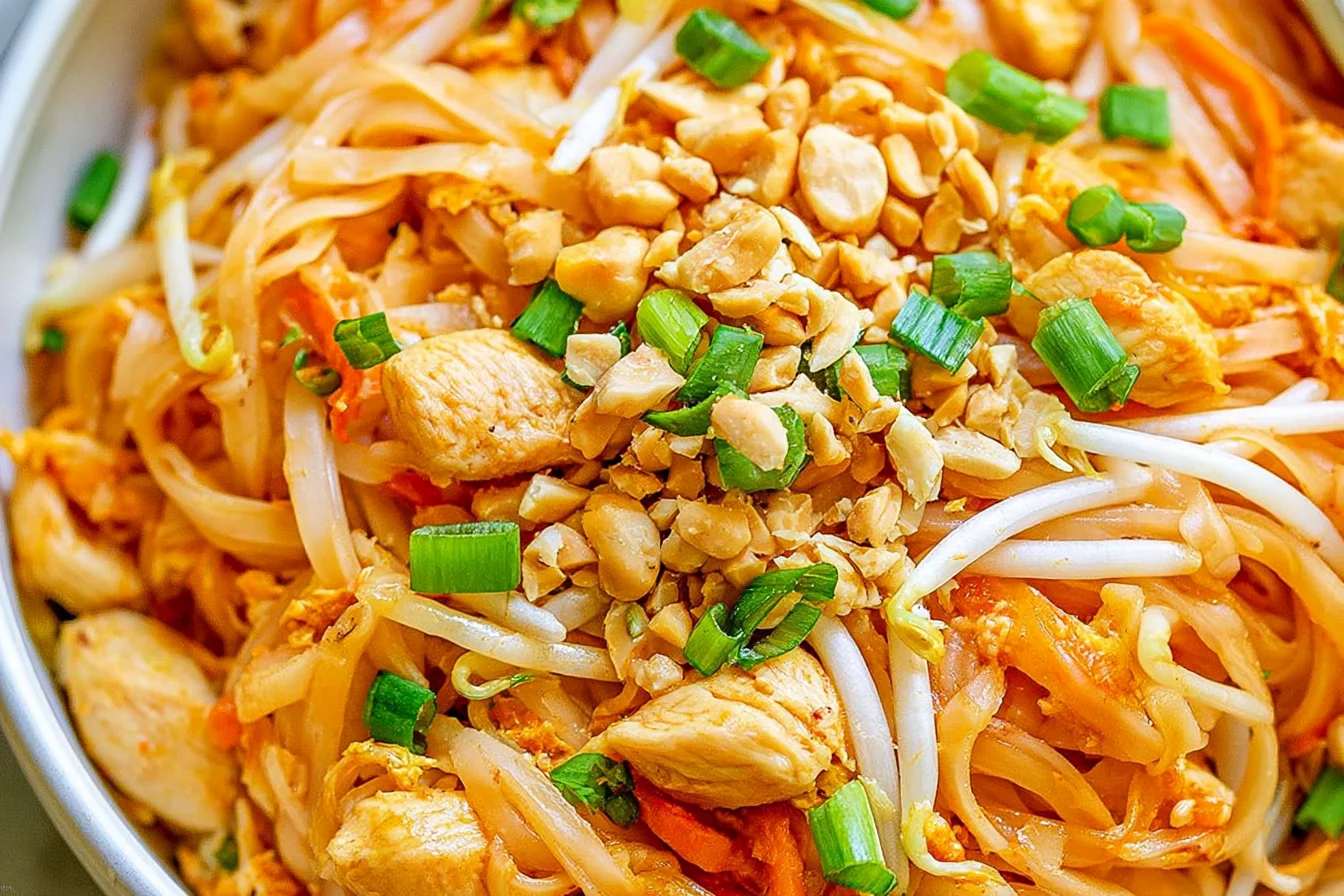
There are nights when dinner needs to happen fast, but another bowl of plain pasta just isn’t going to spark joy. That’s exactly when Chicken Pad Thai comes to the rescue. It’s saucy, savory, slightly sweet, bright with lime, and packed with tender chicken, crisp vegetables, chewy rice noodles, and crunchy peanuts.
Better yet, this homemade version uses ingredients that are easy to find in most American grocery stores. No complicated restaurant techniques. No mysterious kitchen gymnastics. Just one big skillet, straightforward steps, and plenty of bold flavor.
I’m Chef Omar, and recipes like this are exactly why I love cooking at home. You can take everyday ingredients, add a few punchy sauces and fresh garnishes, and suddenly Tuesday-night dinner smells like something you’d happily order twice.
The first time you make it, the ingredient list may look a little long. Don’t let it intimidate you. Once everything is chopped and measured, the actual cooking moves quickly—and I mean quickly. Have those ingredients ready before the chicken hits the pan, because this skillet waits for no one!
Table of Contents
Why You’ll Love This Chicken Pad Thai
- Quick & Satisfying: Once your ingredients are prepped, the dish comes together quickly in one large skillet.
- Family-Friendly: Sweet, savory flavors make it approachable, while sriracha can be added separately for heat lovers.
- Loaded With Texture: Tender chicken, chewy noodles, soft cabbage, carrots, and crunchy peanuts keep every bite interesting.
- Easy to Customize: Adjust the lime, sweetness, vegetables, peanuts, or spice level to suit your family.
- Great for Busy Nights: Prep the vegetables and sauce ingredients ahead, then cook everything when you’re ready for dinner.
- Big Restaurant-Style Flavor: Fish sauce, sesame oil, lime, garlic, ginger, and peanuts create a deeply savory meal without complicated techniques.
Chicken Pad Thai Ingredients
Before turning on the stove, get everything measured and ready. This recipe cooks quickly, so a little preparation makes the whole experience much easier.
You’ll need:
- 1 pound flat rice noodles
- 3 tablespoons toasted sesame oil
- 1 tablespoon coconut oil
- 1 medium sweet onion, diced small
- 1 pound boneless, skinless chicken breast, sliced into thin strips
- 3–5 cloves garlic, finely minced or pressed
- 1 tablespoon ground ginger, or 1/2 tablespoon fresh grated ginger
- 8 ounces green cabbage, thinly sliced (about 3–4 loosely packed cups)
- 1 cup shredded carrots
- 1/3 cup low-sodium soy sauce
- 1/4 cup fish sauce
- 1/4–1/3 cup freshly squeezed lime juice
- 2 tablespoons honey or agave syrup
- 1 large egg, scrambled
- 2 tablespoons sriracha, optional and adjusted to taste
- 3 green onions, thinly sliced
- 2/3 cup chopped roasted peanuts
You can substitute about 1/3 cup minced fresh Thai basil for the green onions if you prefer.
The lime juice deserves a special mention. Start with 1/4 cup if your family prefers a softer citrus flavor. If you love that bright, mouth-puckering contrast against the salty and sweet ingredients, work your way toward 1/3 cup.
How to Make Chicken Pad Thai
1. Prepare the rice noodles
Cook the flat rice noodles according to the package directions. Drain them, rinse under cold water, and set them aside.
Avoid overcooking the noodles. They’ll be tossed with the hot ingredients later, so you want them tender but still sturdy enough to survive a vigorous trip around the skillet.
2. Sauté the onion
Place a very large, deep skillet over medium-high heat. A skillet at least 4 inches deep is helpful because you’ll eventually be adding an entire pound of noodles.
Add the toasted sesame oil, coconut oil, and diced onion. Sauté for about 5 minutes, stirring occasionally, until the onion begins to soften.
Vegetable or olive oil can work if you don’t have the recommended oils, although toasted sesame oil adds wonderful nutty flavor.
3. Cook the chicken
Add the thinly sliced chicken breast.
Cook for approximately 3 minutes, stirring and flipping frequently, until the pieces are cooked through. Very thin strips cook surprisingly fast, so keep an eye on them rather than relying only on the clock.
This is also why slicing the chicken evenly matters. Nobody wants one piece auditioning for charcoal while another is still figuring out what “cooked” means.
4. Add the aromatics
Stir in the minced garlic and ginger.
Cook for about 1 minute, stirring almost constantly. You’re looking for that moment when the garlic and ginger become intensely fragrant.
Don’t let the garlic brown too much. It can turn bitter quickly.
5. Add the vegetables and sauces
Add the sliced cabbage and shredded carrots, followed by the soy sauce, fish sauce, and freshly squeezed lime juice.
Stir everything thoroughly.
Cover the skillet, reduce the heat to medium-low, and simmer for approximately 3 minutes. The cabbage should wilt and soften while retaining a little texture.
Remove the lid and stir again.
6. Balance the flavors
Stir in the honey or agave syrup.
That touch of sweetness is important because it balances the salty fish sauce and soy sauce with the acidity of the lime. Taste is all about teamwork here—no ingredient should be shouting over everyone else.
7. Bring everything together
Add the cooked rice noodles and turn off the heat.
Toss thoroughly until the noodles are coated with the sauce and evenly distributed among the chicken and vegetables.
Add the scrambled egg and sriracha, if using, and toss again.
Finish your Chicken Pad Thai with sliced green onions and plenty of chopped roasted peanuts.
Serve immediately while everything is warm, glossy, and wonderfully fragrant.
Chef Omar’s Tips for Better Pad Thai
- Prep first, cook second. This is probably my biggest tip. Chop your onion, slice your chicken, mince the garlic, measure the sauces, and have your vegetables waiting nearby. Once cooking starts, things happen quickly.
- Slice the chicken thinly. Thin strips cook faster and mix naturally with the noodles. Cutting across the grain can also help keep the chicken tender.
- Use fresh lime juice. Bottled juice works in emergencies, but fresh lime brings a brighter flavor that makes a noticeable difference here.
- Don’t drown the noodles. Follow the package instructions carefully and avoid cooking them until overly soft. Mushy rice noodles are considerably less exciting than their pleasantly chewy cousins.
- Control the heat yourself. Two tablespoons of sriracha will give the dish a kick. Cooking for spice-sensitive kids or adults? Leave it out of the skillet and put the bottle on the table.
- Taste before serving. Want more brightness? Add lime. Need sweetness? Try a small drizzle of honey. Want more savory depth? A modest splash of fish sauce can help. Adjust gradually—you can always add more.
Easy Variations and Serving Ideas
One reason I keep recipes like this in my weeknight rotation is flexibility. A slightly lonely bell pepper sitting in your refrigerator? Slice it up. Extra carrots? Toss them in. Bean sprouts? They make a wonderfully crisp addition.
You can also add cilantro or Thai basil at the end for more freshness. Serve extra lime wedges, chopped peanuts, green onions, and sriracha at the table so everyone can customize their bowl.
For entertaining, I especially like the DIY garnish approach. Put the toppings into small bowls and let guests finish their own servings. It looks impressive while requiring very little extra work—which is exactly the sort of kitchen magic I appreciate.
Chicken Pad Thai FAQs
Can I make Chicken Pad Thai less spicy?
Absolutely. Simply leave out the sriracha. Serve it on the side so anyone who wants heat can add it to their own bowl.
Can I substitute the chicken breast?
Chicken thighs are a good option and tend to stay juicy. Cut them into thin, similarly sized pieces and cook until they reach a safe internal temperature of 165°F.
What can I use instead of coconut oil?
Vegetable, avocado, or olive oil can be substituted. The final flavor will change slightly, but the recipe will still work.
Is fish sauce necessary?
Fish sauce provides much of the deep salty-savory character associated with the dish. If you need to omit it, you’ll want to compensate carefully with another salty, umami-rich ingredient, keeping in mind that the final flavor will be different.
Can I make it ahead?
You can prepare many components ahead of time. Slice the vegetables and chicken and measure your sauce ingredients in advance, keeping raw chicken properly refrigerated and separate from ready-to-eat ingredients. For the best noodle texture, cook and assemble the dish shortly before serving.
Why did my rice noodles become mushy?
They were probably cooked too long before entering the skillet. Cook them only according to the package directions and remember they’ll soften a little more when combined with the hot sauce and vegetables.
Make Tonight a Pad Thai Night
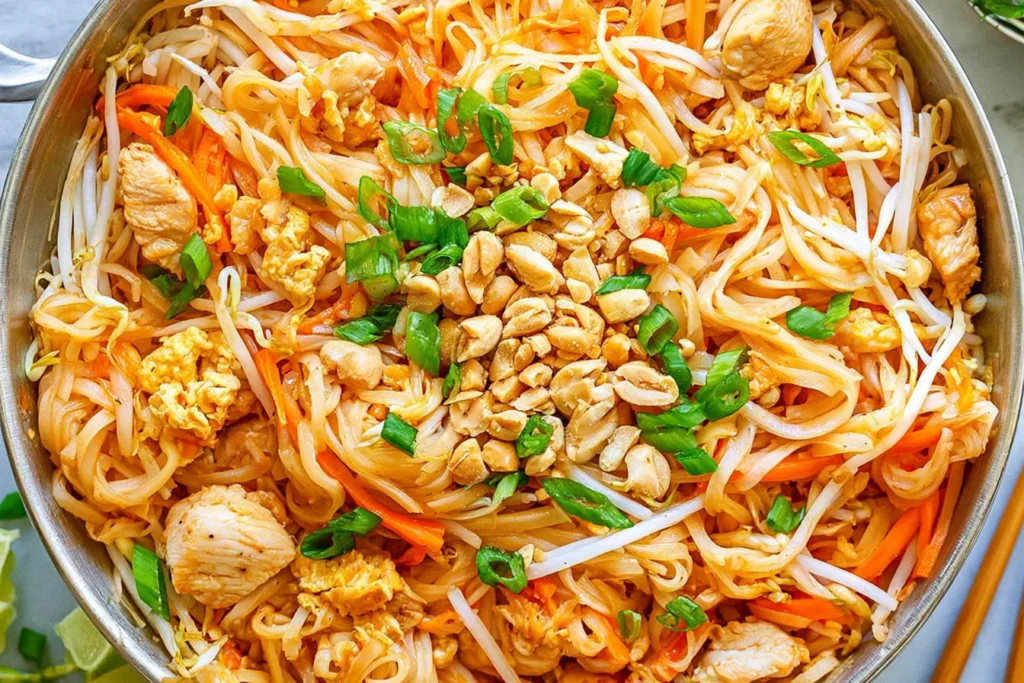
This is the kind of dinner that makes a regular weeknight feel considerably more exciting. You get tender chicken and chewy noodles wrapped in a sweet, salty, tangy sauce, followed by fresh lime and that irresistible peanut crunch.
And despite all those flavors, the technique stays refreshingly simple. Prepare everything before cooking, keep that skillet moving, and taste as you go. That’s the kind of practical cooking I love sharing at Pulse Recipes: approachable enough for a busy evening, yet delicious enough to serve when friends come over.
So grab the biggest skillet you own and give this Chicken Pad Thai a try. Dinner might be homemade, but when those garlic, ginger, sesame, and lime aromas start filling your kitchen, it certainly won’t feel ordinary.
More Flavor-Packed Recipes to Try
If this Chicken Pad Thai earned a spot in your dinner rotation, keep those bold, savory flavors going with a few more easy favorites from Pulse Recipes:
- Craving another fast skillet dinner? Try this Thai Chicken Cabbage Stir-Fry for tender chicken, crisp vegetables, and plenty of satisfying Thai-inspired flavor.
- If the peanutty goodness was your favorite part of this Chicken Pad Thai, you’ll love these Thai Peanut Chicken Wraps for an easy lunch or weeknight meal.
- For another cozy noodle dinner with sweet-and-savory flavor, add these Honey Garlic Chicken Noodles to your must-try list.
- Want something fresh and crunchy alongside your next Asian-inspired meal? This Spicy Peanut Cucumber Salad makes a bright, flavorful pairing.
Made this Chicken Pad Thai? ⭐⭐⭐⭐⭐ Leave a star rating and review below! I’d love to hear how it turned out, what you added, and whether your family went back for seconds. Your feedback also helps other home cooks decide what to make for dinner next!
Chicken Pad Thai
- Total Time: 40 minutes
- Yield: 6 servings 1x
Description
This easy Chicken Pad Thai combines tender chicken, chewy rice noodles, crisp vegetables, scrambled egg, crunchy peanuts, and a savory-sweet lime sauce. Packed with garlic, ginger, sesame, and optional sriracha, it’s a flavorful homemade dinner that comes together quickly in one large skillet.
Ingredients
- 1 pound flat rice noodles
- 3 tablespoons toasted sesame oil
- 1 tablespoon coconut oil
- 1 medium sweet onion, diced small
- 1 pound boneless, skinless chicken breast, thinly sliced into strips
- 3–5 cloves garlic, finely minced or pressed
- 1 tablespoon ground ginger, or 1/2 tablespoon fresh grated ginger
- 8 ounces green cabbage, thinly sliced (about 3–4 loosely packed cups)
- 1 cup shredded carrots
- 1/3 cup low-sodium soy sauce
- 1/4 cup fish sauce
- 1/4–1/3 cup freshly squeezed lime juice
- 2 tablespoons honey or agave syrup
- 1 large egg, scrambled
- 2 tablespoons sriracha, optional and to taste
- 3 green onions, thinly sliced
- 2/3 cup chopped roasted peanuts
Instructions
- Cook the noodles: Cook the rice noodles according to package directions. Drain and rinse under cold water, then set aside.
- Sauté the onion: Heat the toasted sesame oil and coconut oil in a very large, deep skillet over medium-high heat. Add the diced onion and sauté for about 5 minutes, stirring occasionally, until it begins to soften.
- Cook the chicken: Add the thinly sliced chicken and cook for about 3 minutes, stirring and flipping frequently, until cooked through.
- Add the aromatics: Stir in the garlic and ginger. Cook for about 1 minute, stirring frequently, until fragrant.
- Cook the vegetables: Add the cabbage, carrots, soy sauce, fish sauce, and lime juice. Stir well. Cover, reduce the heat to medium-low, and simmer for about 3 minutes, or until the cabbage softens.
- Add sweetness: Remove the lid and stir in the honey or agave syrup.
- Add the noodles: Add the cooked rice noodles and turn off the heat. Toss thoroughly until the noodles, chicken, vegetables, and sauce are evenly combined.
- Finish the Pad Thai: Stir in the scrambled egg and optional sriracha.
- Garnish and serve: Top with sliced green onions and chopped roasted peanuts. Serve warm with extra lime wedges and sriracha, if desired.
Notes
- Slice the chicken into thin, even strips so it cooks quickly and evenly.
- Avoid overcooking the rice noodles because they will soften further when tossed with the hot ingredients.
- Start with 1/4 cup lime juice and add more to taste for a brighter, tangier flavor.
- Adjust the sriracha according to your preferred spice level or serve it on the side.
- Fresh ginger can replace ground ginger.
- Thai basil can replace the green onions for a fresh herbal finish.
- Vegetable or olive oil can be substituted for the coconut oil if needed.
- Store leftovers promptly in an airtight container in the refrigerator for up to 3–4 days.
- When reheating, add a small splash of water to help loosen the noodles.
- For food safety, chicken should reach an internal temperature of 165°F (74°C).
- Prep Time: 20 minutes
- Cook Time: 20 minutes
- Category: Dinner
- Method: Stovetop
- Cuisine: Thai-inspired
Nutrition
- Serving Size: 1/6 of recipe
- Calories: 680 kcal
- Sugar: 12 g
- Sodium: 1850 mg
- Fat: 25 g
- Saturated Fat: 6 g
- Unsaturated Fat: 17 g
- Trans Fat: 0 g
- Carbohydrates: 84 g
- Fiber: 5 g
- Protein: 34 g
- Cholesterol: 85 mg