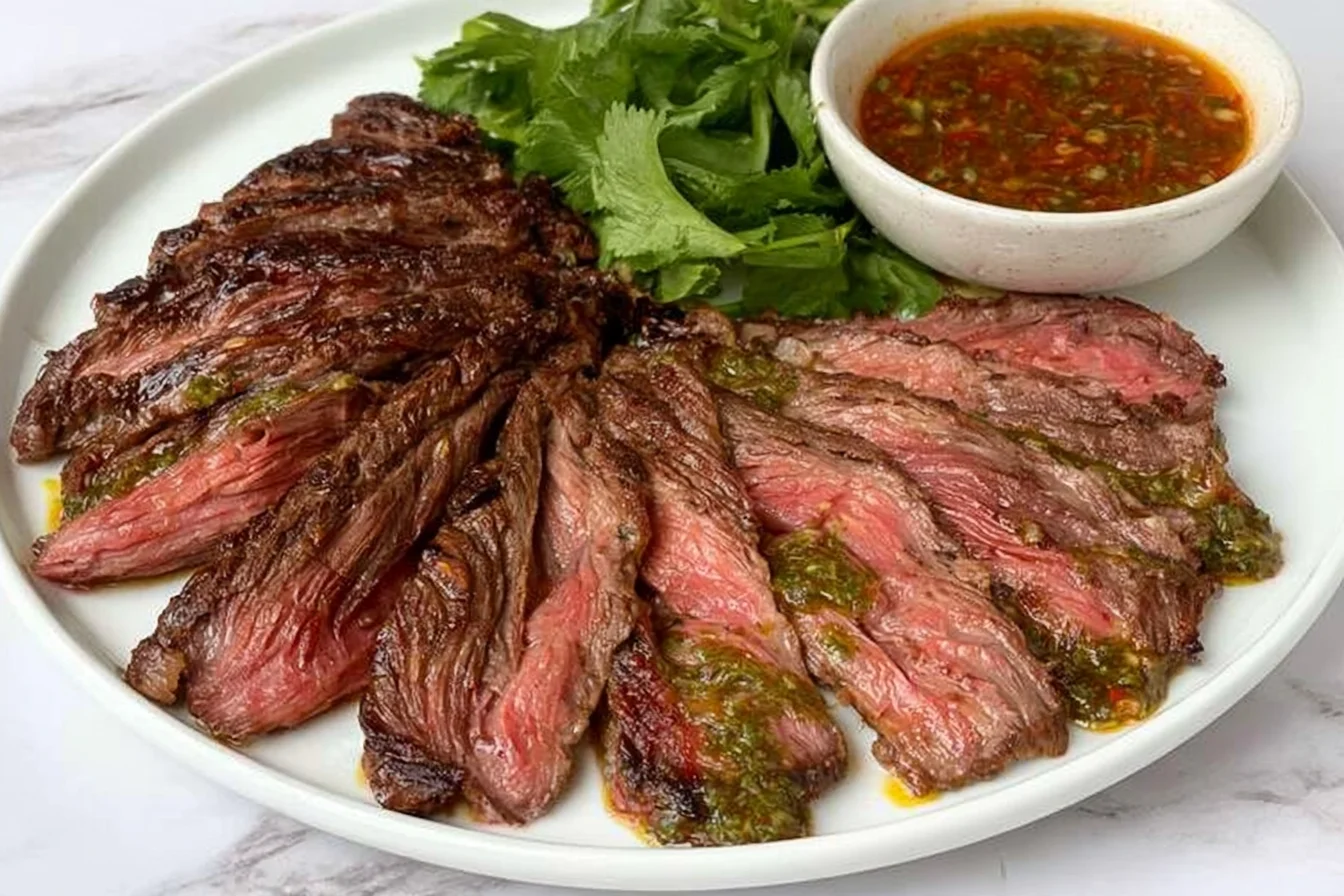
Crying Tiger Beef is the kind of recipe that makes an ordinary dinner feel like a special night out. Imagine juicy, beautifully seared steak, a sweet and savory marinade, and a bold Thai dipping sauce that brings together tangy tamarind, fresh lime, toasted rice, and just the right amount of heat.
If you love steak but want something more exciting than the usual salt-and-pepper routine, this Thai-inspired favorite deserves a spot on your dinner table.
The best part? You don’t need a fancy grill or complicated cooking techniques. A simple skillet, a handful of flavorful ingredients, and a little patience are all it takes.
As Chef Omar, I love recipes that turn familiar ingredients into something memorable. This is exactly that kind of dish. The steak is delicious on its own, but once you dip a tender slice into that punchy sauce, you’ll understand why Crying Tiger Beef is such a popular Thai dish.
Table of Contents
Why You’ll Love This Crying Tiger Beef
- Big, Bold Flavor: A savory steak marinade pairs beautifully with a tangy, spicy Thai dipping sauce.
- Easy to Make: Simple preparation and straightforward cooking steps make this recipe approachable for beginners.
- Perfect for Steak Lovers: Ribeye, sirloin, and New York strip all work beautifully.
- Customizable Heat: Adjust the chili flakes to make the dipping sauce mild or fiery.
- Great for Entertaining: Serve sliced steak with a bowl of dipping sauce for a restaurant-style presentation.
- Versatile Meal: Enjoy it with jasmine rice, sticky rice, fresh vegetables, or crisp lettuce wraps.
Ingredients you’ll Need
This recipe uses three main components: the beef, the flavorful marinade, and the traditional-style dipping sauce.
For the Steak
- 1 lb ribeye, sirloin, striploin, or New York strip steak, about 1 inch thick
- 2 teaspoons vegetable oil or another neutral cooking oil
Choosing your beef: Ribeye delivers extra richness thanks to its marbling, while sirloin offers a slightly leaner option. New York strip is another excellent choice because it stays tender when cooked properly.
For the Steak Marinade
- 1 tablespoon oyster sauce or vegetarian stir-fry sauce
- 1 tablespoon finely chopped palm sugar (or brown sugar)
- 1 tablespoon fresh lime juice
- 1 tablespoon regular or light soy sauce
- 2 teaspoons minced garlic
- 2 teaspoons vegetable oil or another neutral oil
The marinade may look simple, but every ingredient has a purpose.
Oyster sauce adds savory depth, palm sugar brings gentle sweetness, and lime juice balances everything with a fresh, citrusy kick.
Fresh garlic adds aromatic flavor that becomes especially delicious when the steak hits the hot pan.
For the Thai Dipping Sauce
- 1 tablespoon tamarind pulp
- 3 tablespoons boiling water
- 1 teaspoon uncooked glutinous rice
- 1 tablespoon finely chopped palm sugar (or brown sugar)
- 1 tablespoon finely diced shallots
- 1 tablespoon finely chopped cilantro
- 1 tablespoon fish sauce
- 1 tablespoon fresh lime juice
- ½ teaspoon Thai chili flakes or gochugaru
The tamarind gives this sauce its signature tangy flavor, while toasted rice adds a slightly nutty taste and pleasant texture.
If you’ve never made a dipping sauce with toasted rice before, you’re in for a treat!
How to Make Crying Tiger Beef
Making Crying Tiger Beef is surprisingly simple. The key is preparing the dipping sauce while your steak marinates so everything comes together smoothly.
Step 1: Marinate the Beef
In a large mixing bowl, combine the oyster sauce, palm sugar, lime juice, soy sauce, minced garlic, and vegetable oil.
Stir until the sugar begins to dissolve and the ingredients form a smooth marinade.
Add the steaks and turn them several times to coat every side.
Let the beef marinate for at least 15 minutes. For a longer marinade, cover and refrigerate the steak, then remove it shortly before cooking.
Chef Omar’s tip: Don’t skip the marinade. Even 15 minutes helps give the beef a delicious layer of sweet and savory flavor.
Step 2: Prepare the Tamarind
Place the tamarind pulp in a small bowl and pour the boiling water over it.
Use a fork to break up the pulp and release its flavor.
Allow the mixture to cool until it is comfortable to handle. If the tamarind contains seeds or fibrous pieces, loosen the pulp with clean hands or a spoon.
Pour the mixture through a fine-mesh strainer, pressing to extract the liquid. Discard the seeds and fibers.
Set the strained tamarind liquid aside.
Step 3: Toast the Rice
Heat a small, dry skillet over medium heat.
Add the uncooked glutinous rice and toast for approximately 3–4 minutes, stirring frequently, until the grains develop a light golden-brown color.
Remove the rice from the heat and let it cool briefly.
Transfer it to a spice grinder, mortar and pestle, or blender. Grind into a fine or slightly coarse powder.
This small ingredient adds a delicious toasted flavor that makes the dipping sauce taste more authentic.
Step 4: Make the Dipping Sauce
In a small bowl, combine the prepared tamarind liquid, toasted rice powder, palm sugar, shallots, cilantro, fish sauce, fresh lime juice, and chili flakes.
Stir until the sugar dissolves and the ingredients are evenly mixed.
Taste and adjust according to your preference.
Want more acidity? Add a little extra lime juice. Prefer more sweetness? Stir in a pinch of sugar. Love spicy food? Increase the chili flakes.
Set the sauce aside while you cook the beef.
Step 5: Sear the Steak
Heat 2 teaspoons of vegetable oil in a heavy-bottomed skillet or cast-iron pan over medium-high heat.
Let the pan become hot before adding the steaks.
Remove the beef from the marinade, allowing excess liquid to drip away, and carefully place it in the skillet.
For a 1-inch steak, cook for approximately 3–4 minutes per side as a starting point for a pink center.
Cooking time varies with steak thickness, pan temperature, and your preferred doneness. Use an instant-read meat thermometer rather than relying on timing alone.
For food safety, the USDA recommends cooking whole beef steaks to an internal temperature of at least 145°F (63°C), followed by a 3-minute rest.
If the marinade begins to darken too quickly, reduce the heat slightly. The sugar should create a delicious caramelized coating, not a burnt crust.
Step 6: Rest, Slice, and Serve
Transfer the cooked steaks to a cutting board.
Allow them to rest for approximately 10 minutes so the juices redistribute throughout the meat.
Using a sharp knife, slice the steak into thin strips against the grain.
Arrange the sliced beef on a serving platter and place the dipping sauce alongside it.
Serve immediately and enjoy every juicy, flavorful bite!
Chef Omar’s Best Tips for Perfect Crying Tiger Beef
A few simple tricks can make this recipe even better.
- Choose the right steak. Look for cuts with good marbling, especially if you want extra-juicy results. Ribeye is a fantastic choice.
- Preheat your skillet. A properly heated skillet helps develop that beautiful browned crust. If your pan isn’t hot enough, the beef may release moisture and steam instead of searing.
- Avoid overcrowding. Cook the steaks in batches if necessary. Giving each piece enough space helps create a better sear.
- Use freshly squeezed lime juice. Fresh lime gives the marinade and dipping sauce a brighter flavor than bottled juice.
- Don’t forget the resting time. Cutting the steak immediately after cooking can cause more juices to run onto your cutting board.
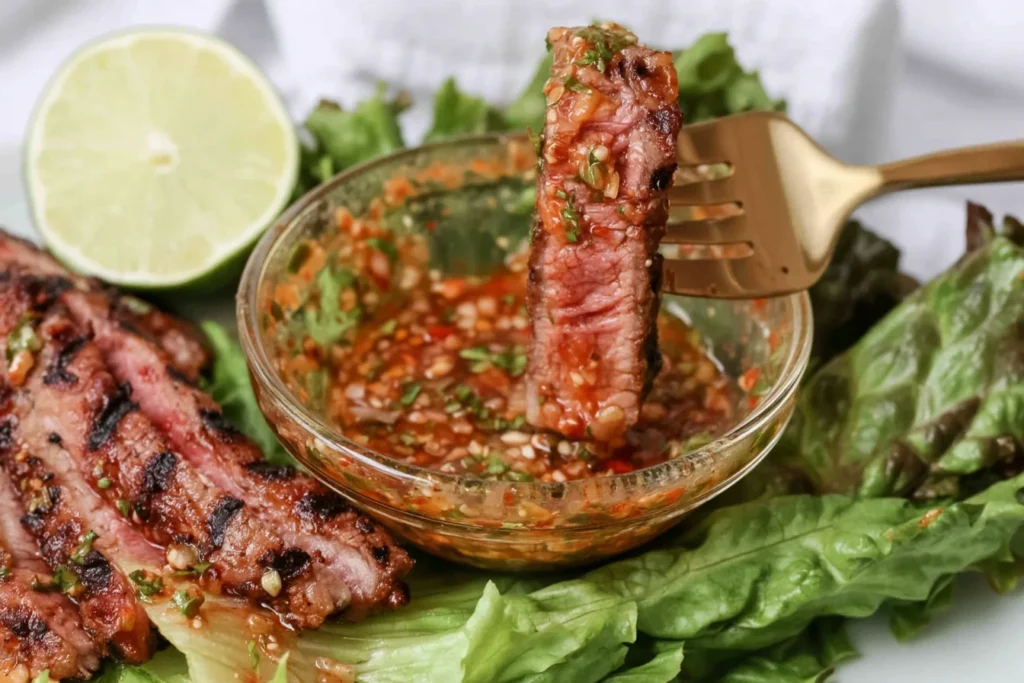
And here’s one more trick: serve the dipping sauce in a separate bowl instead of pouring it over the steak. That way, everyone can control how much spice and tanginess they want.
FAQs About Crying Tiger Beef
What cut of beef is best for Crying Tiger Beef?
Ribeye is an excellent choice because its fat marbling produces juicy, flavorful steak. Sirloin and New York strip are also great alternatives.
Is Crying Tiger Beef very spicy?
The beef itself isn’t especially spicy. Most of the heat comes from the dipping sauce, so you can easily adjust the chili flakes to suit your taste.
Can I make Crying Tiger Beef without a grill?
Absolutely! A cast-iron skillet or heavy frying pan works beautifully. The key is using enough heat to develop a delicious crust.
Can I substitute tamarind pulp?
Yes. Prepared tamarind concentrate can work, although its strength varies by brand. Start with a small amount, dilute as needed, and adjust to taste. Fresh lime juice adds acidity but won’t fully replace tamarind’s distinctive flavor.
Can I prepare Crying Tiger Beef ahead of time?
Yes! You can prepare the marinade and dipping sauce in advance. Keep the beef refrigerated while marinating and cook it shortly before serving for the best texture.
Bring Bold Thai Flavors to Your Dinner Table
There’s something incredibly satisfying about a recipe that delivers restaurant-quality flavor without making dinner complicated.
With its juicy, caramelized steak, fragrant marinade, and tangy, spicy dipping sauce, Crying Tiger Beef brings an exciting combination of flavors to your kitchen.
Whether you’re preparing a weeknight dinner, planning a special meal, or simply looking for a new way to enjoy steak, this recipe is worth trying.
Grab your skillet, mix up that irresistible dipping sauce, and discover why Crying Tiger Beef is a favorite among Thai food lovers.
More Delicious Recipes You’ll Love
If you enjoyed this Crying Tiger Beef, why stop here? Explore more flavorful beef dishes, Thai-inspired favorites, and fresh sides that will make your next meal unforgettable:
- Thai Beef Salad – Love the bold Thai flavors of Crying Tiger Beef? This refreshing salad combines tender beef with fresh vegetables and a deliciously tangy dressing.
- Korean Beef Bowl – Discover another irresistible Asian-inspired beef dinner packed with savory flavor and perfect for busy weeknights.
- Grilled Steak Bowl – If juicy, perfectly cooked steak is your favorite, this satisfying steak bowl is another delicious recipe worth trying.
- Thai Mango Cucumber Salad – Looking for the perfect side dish? This fresh, crunchy, sweet-and-tangy salad pairs beautifully with spicy Crying Tiger Beef.
⭐ Loved this Crying Tiger Beef recipe? We’d love to hear from you! Leave a 5-star rating below if you enjoyed it, and share your experience in the comments. Your reviews help other home cooks discover delicious recipes, too!
Crying Tiger Beef
- Total Time: 30 minutes
- Yield: 4 servings 1x
Description
Juicy, tender Crying Tiger Beef features perfectly seared steak marinated in garlic, soy sauce, lime, and palm sugar. Served with a bold Thai tamarind dipping sauce made with toasted rice, fish sauce, fresh herbs, and chili flakes, this flavorful Thai-inspired steak recipe is perfect for an easy, restaurant-quality dinner at home.
Ingredients
For the Steak
1 lb ribeye, sirloin, striploin, or New York strip steak (1-inch thick)
2 teaspoons vegetable oil or any neutral cooking oil
For the Steak Marinade
1 tablespoon oyster sauce (or vegetarian stir-fry sauce)
1 tablespoon palm sugar, finely chopped (or brown sugar)
1 tablespoon fresh lime juice
1 tablespoon regular soy sauce (or light soy sauce)
2 teaspoons garlic, minced
2 teaspoons vegetable oil or any neutral oil
For the Thai Dipping Sauce
1 tablespoon tamarind pulp
3 tablespoons boiling water
1 teaspoon uncooked glutinous rice
1 tablespoon palm sugar, finely chopped (or brown sugar)
1 tablespoon shallots, finely diced
1 tablespoon fresh cilantro, finely chopped
1 tablespoon fish sauce
1 tablespoon fresh lime juice
½ teaspoon Thai chili flakes or gochugaru
Instructions
1. Prepare the marinade: In a large bowl, combine oyster sauce, palm sugar, lime juice, soy sauce, minced garlic, and vegetable oil. Stir until well mixed.
2. Marinate the steak: Add the steak and coat evenly with the marinade. Let it rest for 15 minutes at room temperature. For longer marinating, cover and refrigerate.
3. Prepare the tamarind: In a small bowl, combine tamarind pulp and boiling water. Break apart the pulp with a fork. Let cool, then press through a fine-mesh strainer to remove seeds and fibers. Set the tamarind liquid aside.
4. Toast the rice: Heat a dry skillet over medium heat. Add the glutinous rice and toast for 3–4 minutes, stirring frequently, until lightly golden. Grind into a fine powder using a spice grinder or mortar and pestle.
5. Make the dipping sauce: In a small bowl, combine the tamarind liquid, toasted rice powder, palm sugar, diced shallots, cilantro, fish sauce, lime juice, and chili flakes. Stir thoroughly and adjust the sweetness, acidity, or heat to taste.
6. Sear the steak: Heat 2 teaspoons of vegetable oil in a cast-iron skillet over medium-high heat. Add the steak, letting excess marinade drip off. Sear for approximately 3–4 minutes per side, adjusting the cooking time according to thickness and desired doneness. For USDA-recommended food safety, cook whole beef steaks to at least 145°F (63°C) and rest for at least 3 minutes.
7. Rest the steak: Transfer the cooked steak to a cutting board and allow it to rest for 10 minutes to retain its juices.
8. Slice and serve: Slice the steak thinly against the grain. Arrange on a serving platter with the spicy Thai dipping sauce. Garnish with fresh cilantro, lettuce, or lime wedges if desired. Serve immediately.
Notes
Best steak cuts: Ribeye delivers rich flavor and tenderness, while sirloin and New York strip are excellent alternatives.
Marinating: Allow at least 15 minutes for the marinade to flavor the beef. Refrigerate if marinating longer.
Adjust the spice: Reduce the chili flakes for a milder sauce or increase them for extra heat.
Tamarind substitute: Tamarind concentrate can replace pulp, but the strength varies. Start with a small amount and adjust to taste.
Toast the rice carefully: Stir continuously to prevent burning and bring out its nutty aroma.
Don’t overcrowd the skillet: Cook in batches if necessary for a beautifully browned crust.
Serving suggestions: Pair with jasmine rice, sticky rice, cucumber salad, or fresh lettuce wraps.
Storage: Refrigerate leftover cooked steak in an airtight container for up to 3–4 days.
- Prep Time: 20 minutes
- Cook Time: 10 minutes
- Category: Dinner, Main Course
- Method: Pan-Seared
- Cuisine: Thai
Nutrition
- Serving Size: ¼ recipe (about 4 oz raw steak plus sauce)
- Calories: 335 kcal
- Sugar: 7 g
- Sodium: 740 mg
- Fat: 19 g
- Saturated Fat: 6 g
- Unsaturated Fat: 12 g
- Trans Fat: 0.5 g
- Carbohydrates: 10 g
- Fiber: 0.5 g
- Protein: 30 g
- Cholesterol: 85 mg